
Exploring Beyond the Clickbait
Why It Matters When We Get the Parent/Coach Relationship Wrong

Prevention Education Series
The goal of this series is to bridge the gap between prevention education theory with on-the-ground practice.
Recently, our team asked nearly 4,000 coaches representing 66 different sports about their experiences related to safety, well-being, and abuse prevention. The National Coaches Survey: Building Safer Sport Together asked coaches, assistant coaches, and trainers about everything from abuse and misconduct in sport to satisfaction, burnout, behaviors, and norms. The findings surfaced important and sometimes difficult realities, including the fact that many coaches report experiencing harassment from parents.
Harassment of coaches is a real issue and one worth taking seriously. According to our survey findings:
- 56% of coaches who experienced verbal harassment or abuse indicated that the source of that mistreatment was most often parents of athletes.
- Almost 57% of those who received threats identified parents as the most common source.
- Nearly 19% said they needed support managing difficult behavior by athletes’ parents and family members.
Everyone in the sport ecosystem should be free from abuse, including coaches. Especially given the attrition of coaches at the grassroots level. But in the days following the release of our report, much of the public conversation quickly narrowed into a simpler narrative: parents are out of control. Headlines declared parents a “major problem” and “the biggest threat to youth sports.” I received a number of media requests to discuss the findings, each one with sideline video clips of parental harassment.
I understand why this parents-gone-wild framing resonates. We live in a culture that tends to reward hot takes for complicated social dynamics. And, of course, nuanced conversations rarely travel as fast as clickbait headlines. But prevention work suffers when we collapse complex relationship dynamics into simplistic villains.
The Foundation for Safeguarding
Parents and coaches are arguably the two most influential adults in a young athlete’s sport experience. Sport organizations could not function without them. They shape norms, boundaries, emotional safety, communication, accountability, and expectations. Fundamentally, neither role exists without the other, and every sport organization’s safeguarding culture is heavily influenced by the relationship between these two groups.
Unfortunately, conversations about this relationship often become polarized very quickly. The “parents are out of control” clickbait narrative renders invisible some of the other important experiences that coaches shared in this survey, like burnout, identity discrimination, and gaps in education.
Coaches absolutely experience harassment, inappropriate parent behavior, and unrealistic expectations. But if we want safer sport environments for kids, the relationship between their parents and coaches is too important to reduce to a debate about “Who is the problem?”
Sport organizations can help reframe this question by treating parents and coaches as a team, rather than opposing forces to manage. At the grassroots level, both groups have a significant influence on the culture of a sport program and high functioning prevention environments require collaboration between them.
The narrative about parents being the singular problem isn’t just “unfair” to parents. It presents increased risk to kids. The issue is not whether parent behavior can become harmful. It absolutely can. Some parents over-identify with their child’s performance, intervene in unhealthy ways, or project their own anxieties into the sport environment. Problematic interference by parents has even prompted famous professional athletes to recommend that parents stop attending practices in order to protect the experience of athletes. While I understand the intention behind this recommendation, oversimplified narratives can unintentionally create new risks.
For example, we know that in a sport context, one of the highest risks for sexual abuse happens during one-on-one interactions when an adult (often a coach) is alone with a child. Coaches who intend to abuse their athletes can weaponize the “overinvolved” parent narrative, sometimes even setting rules that bar parents from attending practice. Further, parents who are thoughtful and self-aware may refrain from speaking out early about concerns because they are afraid of being labeled “that parent.” In reality, that lack of parental involvement increases isolation and makes boundary violations harder to spot early.
The issue of parents not wanting to raise concerns, especially with coaches they already trust, comes from an understandable place. In our survey, most coaches (84.6%) indicated that, at some point within the past five years, they felt burned out by their coaching duties. Nearly 65% seriously considered quitting their coaching role entirely. But if parents become afraid to ask questions, notice patterns, or voice concerns because they do not want to appear difficult to a coach potentially experiencing burnout, we can unintentionally create environments with less accountability and less oversight.
Sport organizations have the opportunity to help set a new narrative around parents, namely, that they are not external to this system. They are part of it. Parents are one of the few consistent lines of visibility into a child’s sport experience. When we frame involved parents as a problem to manage, we risk turning down the volume on the very questions that help surface early warning signs. And when parents consistently show up in ways that are harmful or disruptive, it can also make it harder for coaches and programs to remain open to feedback. Both dynamics matter.
A Healthier Relationship
High functioning parent/coach relationships do not happen automatically any more than healthy marriages, friendships, or teams do. Parents and coaches are often framed as two parallel influences with very little investment in communicating what the other needs while sport organizations may be left out of the conversation altogether.
But parents are not a monolith. There are single parents, parents with partners, foster parents and guardians, and blended families. Some have kids in the elite athlete pipeline, while others prioritize recreational sport. Some parents are former athletes themselves, and others barely understand the rules.
Coaches are not a monolith either. Some are volunteers at the grassroots level coaching weekend games, while others are highly sought after elite professionals. Some are new to coaching, and some have been in the game for 34 years. Some are former athletes, and others are brand new to the sport.
This matters because the parent/coach dynamic and the cultural agreements between both groups are highly contextual. Sport organizations help shape the conditions under which these relationships operate. Organizational expectations, communication structures, reporting pathways, staffing models, coach support, and feedback systems all influence whether the parent/coach relationship becomes collaborative or adversarial. Solutions should reflect that context.
Healthy sport culture depends less on the absence of tension and more on the ability to navigate that tension transparently and respectfully. From a safeguarding standpoint, the answer is not less oversight. It is healthier oversight. It is important to explore and understand what each party (coaches, parents, and sport organizations) needs from the others.
What follows are not rules. They are relational practices… some are structural, some are seemingly small, and some are just about how we show up on a Wednesday afternoon at practice. Whether these suggestions are new or familiar strategies already used by your sport organization and/or coaches, they can help contribute to a healthy relationship.
1. Treat communication as a standing practice, not a reactive one.
The most effective relationships don’t start with conflict resolution. They start with alignment conversations before anything goes wrong.
- Coaches can: Build clarity before there is conflict. That means setting expectations early about communication and boundaries, rather than waiting until something goes wrong. For example, set boundaries around your autonomy and invite parental involvement by designating an area slightly away from the field for them to watch practices.
- Parents can: Use curiosity as a tool, even in frustration. Try a simple internal check: “Is what I am about to say/ask rooted in a safety concern or am I overstepping my boundary into unsolicited coaching advice?”
- Organizations can: Create explicit expectations for parent/coach communication before conflict emerges, not after it escalates.
2. Commit to at least one intentional touchpoint early in the season.
Instead of performance, focus on how the relationship will work: what information gets shared, how concerns are raised, and what support looks like on both sides.
- Coaches can: Decide in advance what communication is appropriate and what isn’t. Make it consistent across the team so it is not individualized or ambiguous.
- Parents can: Ask coaches to share their coaching philosophy and goals for the season. This shifts the focus of questions from outcomes, “Why is my child playing less?” to culture and development, “How can I work with you to help my child grow and have more opportunities as a player?”
- Organizations can: Build feedback mechanisms that capture the health of the parent/coach relationship itself, not just individual complaints. Treat conflict between parents and coaches as data about system design, not simply behavior to correct.
3. Build shared understanding that it is a structured practice.
That means agreeing on things like visibility, appropriate boundaries, and what “good involvement” actually looks like.
- Coaches can: Help other coaching staff/volunteers understand the why behind safeguarding protocols: “I would never hurt a kid, but if we normalize one-on-one texting, that can be exploited by someone who would.”
- Parents can: Practice noticing patterns instead of reacting to isolated moments. Your child coming home upset after one practice is data. The same reaction after 10 practices may be a signal. The skill is learning the difference.
- Organizations can: Reinforce from the top down that safeguarding protocols are not put in place because sport organizations don’t “trust” coaches. All programs should have protocols in place, regardless of trust.
4. Create low-friction ways to surface concerns that don’t rely solely on escalation or complaints.
- Coaches can: Ground any concerns they have when approaching parents in their shared values for the well-being and development of the child athlete: “Your child has been doing well learning this skill, but it may slow them down if they have conflicting directions from you and me. Let’s try this strategy first and then connect on how it is working.”
- Parents can: Make your intentions clear before raising a concern: “I don’t want to interfere in your coaching because I trust your leadership. I’ve just noticed that my kid has come home really upset after the last 3 practices so I’m checking in to see if there is anything I need to know?”
- Organizations can: Design multiple pathways for concerns so all accountability does not sit inside the coach/parent relationship alone (e.g., structured check-ins, anonymous feedback tools, or a designated third party who can track patterns rather than isolated incidents). Support coaches with resources and supervision so parent engagement does not become an unmanaged burden placed on individuals.
5. And perhaps most importantly, agree that discomfort is not automatically dysfunction.
Some of the healthiest environments will still include tension. The question is whether that tension is visible, discussable, and contained within a relationship that stays intact.
- Coaches can: Differentiate feedback from interference. Not every question is a challenge to authority.
- Parents can: Stay engaged without turning every moment into intervention.
- Organizations can: Reinforce that appropriate parental visibility is not a threat to be managed, but a protective factor to be structured well.
Building A Strong Safeguarding Environment Together
The strongest safeguarding environments are not the ones where parents disappear, or coaches operate under constant suspicion. They are environments where sport organizations, coaches, and parents learn how to work together transparently enough that harmful behavior has fewer places to hide.
Safeguarding becomes much harder when the two most influential adults in a child’s sport experience stop seeing each other as partners in the work. And in safeguarding terms, that’s not neutral. That’s a loss of protective structure. Sport organizations should recognize that the system depends on information flowing between parents and coaches. They may play different roles, but parents and coaches should never lose sight of the fact that they are on the same team.

Monica Rivera
Vice President, Education & Research, U.S. Center for SafeSport
Monica has spent nearly two decades in the field of interpersonal violence prevention, much of that time working directly with survivors of abuse. She leads our team of subject matter experts who share a belief in the transformative power of prevention education.
Please email our education team with questions or feedback about the content of our online courses, resources, or live trainings: [email protected].
Featured Resource
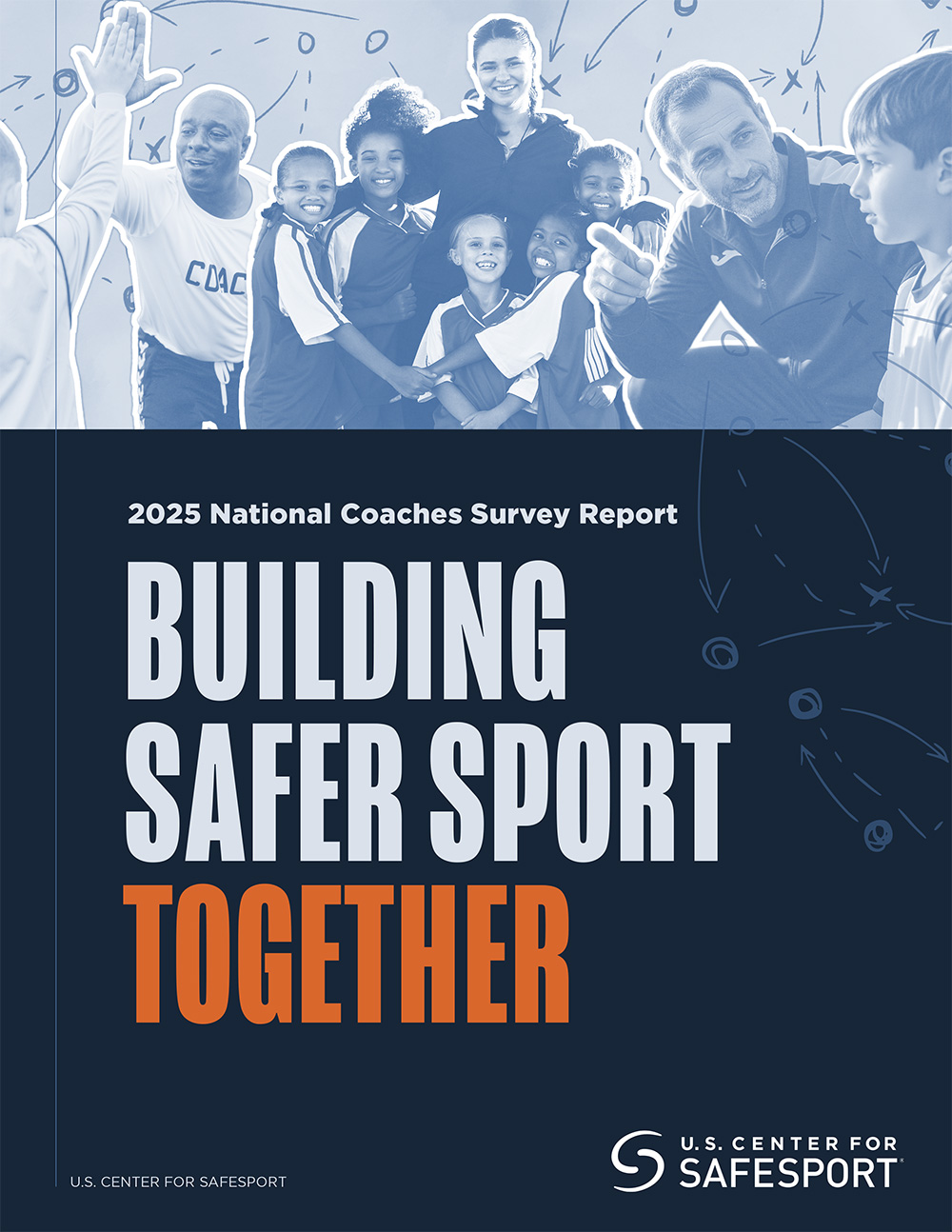
Our National Coaches Survey: Building Safer Sport Together asked coaches to share their input on abuse and misconduct in sport as well as satisfaction, burnout, behaviors, and norms. The results serve as a guiding resource in our ongoing efforts to meet the needs of athletes, coaches, and the entire sport community.